
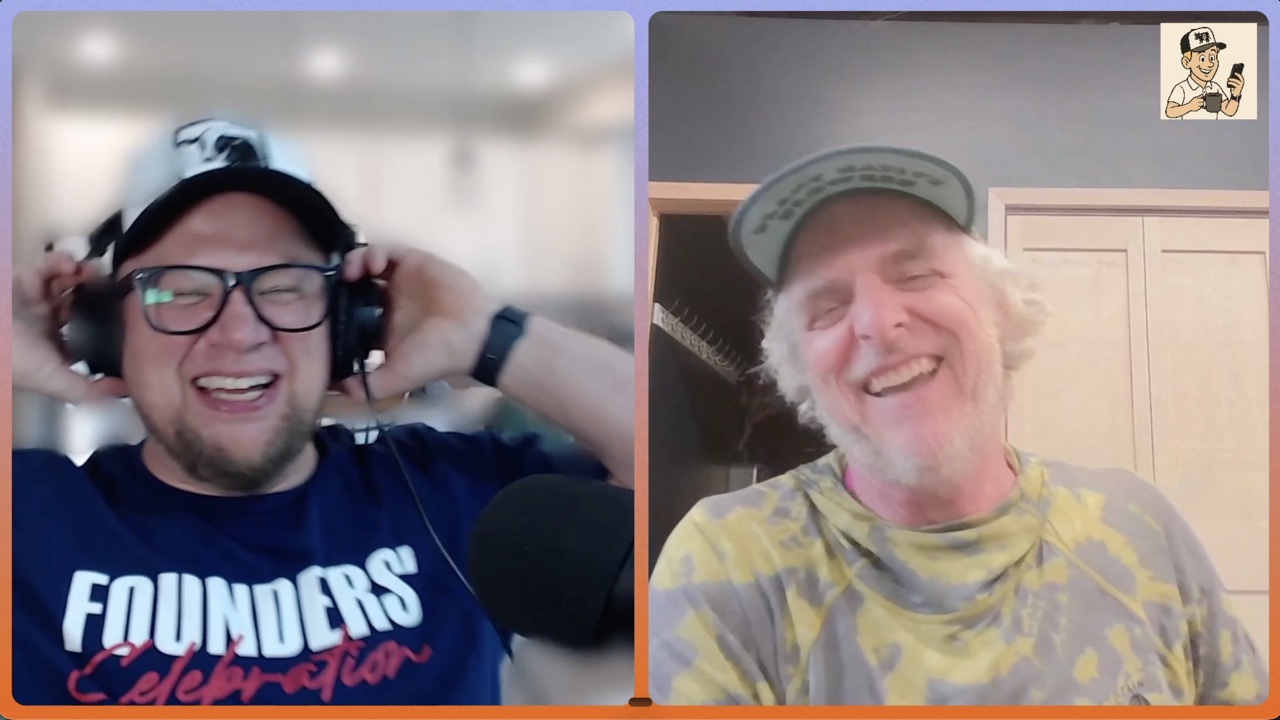
Jason Rathe started Field Outdoor Spaces in 2005. Before that he had an English degree, a kinesiology degree, seven years in the tech industry and a short run in restaurants. He wanted a job he could keep learning in for the rest of his life, went back for a masters in horticulture at the University of Minnesota, and started the company right around the time he was getting married. His worst case was that it failed and he walked away with everything he learned running it. About eight years ago he asked his crew if they saw themselves at the company in five years. Everybody said no. So he asked what it would take. They wanted to work all year, stay healthy into their fifties, and buy a house and raise a family. Field hired a trainer, started treating landscaping as an athletic pursuit, and built a winter remodeling arm, Uplift by Field, so the crews keep working when the ground freezes. Two years ago they hired one person. This year they hired nobody. Now he is rebuilding a twenty five page Excel estimate with AI on top of the EOS system the company already runs on, aiming for estimates in half the time by spring 2027.
Watch: YouTube Listen: Apple Podcasts | Spotify
Find Jason: fieldoutdoorspaces.com | Instagram | Facebook
Chapters
- 00:00 - Welcome, and who Jason Rathe is
- 01:22 - An English degree, a kinesiology degree and seven years in tech
- 03:50 - A masters in horticulture, and the frustrated employee
- 05:19 - Worst case, it fails and you learned a ton
- 06:27 - Ryan's road from bartender to AI
- 11:58 - Twenty one years of system limits, gone
- 14:11 - A whiteboard calendar and a 25 page Excel estimate
- 16:10 - Running the company on EOS
- 18:11 - Saying the hard truth over and over
- 22:52 - How an EOS integrator started building systems with AI
- 26:05 - Why crew lead is the hardest job in landscaping
- 27:58 - Only the information the crew needs, when they need it
- 30:18 - Building a company brain
- 32:12 - What changes for the designers and the estimator
- 36:48 - Not about a bigger boat
- 37:19 - John Ruskin and the best jobs
- 39:30 - Nobody saw themselves here in five years
- 41:26 - Hiring a trainer, landscaping as an athletic pursuit
- 45:27 - Uplift by Field and winter remodeling
- 47:02 - Selling shares to seven people
- 48:39 - Wrapping up
Takeaways, in Jason's words
- "The worst case was that it fails, but I have so much more experience that I can go out to somebody else and just be like, yeah, but I ran this company for two years and look at all this stuff that I learned." (05:19)
- "This last twenty one years has disappeared of all of my systems limitations." (12:28)
- "I don't actually think EOS has a bunch of special sauce other than the fact it's a regimented system that now I don't have to think about." (16:38)
- "It is meant to train you to say the hard truth over and over and over." (18:11)
- "A group can never make a final decision. You can get ninety percent of the way, but somebody's gotta have the ball and go across the line." (21:54)
- "When you can take out the administrative crap and just the information processing, it allows them to focus on the things that matter." (28:29)
- "I'd have no problem with the whole reason for the business is that I want a bigger boat. That just isn't me." (36:48)
- "What if we had an economy of the best jobs rather than an economy that makes the most efficient things?" (39:00)
- "We asked everybody if they would be at the company in five years, and everybody said that they did not see themselves being at the company." (39:30)
- "Landscaping is actually a very athletic pursuit." (41:55)
- "If you're a two or three of pain, that is the natural athletic pursuit of landscaping. But if you're at a four or five, that's not natural and you need to do something about it." (44:16)
- "Two years ago we only hired one person and this year we didn't hire anybody." (45:59)
Full transcript
Reasonable Tech Dad (00:00)
Welcome, ladies and gentlemen, to another episode of the Reasonable Contractor Podcast. I am your host, Ryan Templin, the Reasonable Tech Dad. Have a new friend with us here, Jason Rathe from Field Outdoor Spaces. And Jason has been in the game for 20 years, won numerous awards, has some pretty good uh employee philosophies I'd like to get into, scoreboards, those kind of things. But uh better than me tell it, let's pass it over to Jason. Jason Thanks for coming on. Appreciate you being here and uh tell us the story, man. How'd you get started?
Jason Rathe (00:32)
Yeah, so it's uh Jason Rathe and Field Outdoor Spaces. Um that's all right. We just we just met. So if uh if you nailed everything, that's really impressive. I just had a meeting with somebody where I think I messed up her name like three times before I got it right. So uh I have to I have to make up something like I think I'm gonna make up some disease that I have, you know. It's like uh oh I I have uh forgetting names syndrome, so you know, so so bear with me, you know.
Reasonable Tech Dad (00:36)
I'm so sorry. Thank you for the correction. Ha ha uh So you get it. Thank you for that. I love it. Something there it is uh Bear with me. That was the words I was saying, dude. Go ahead. That's awesome.
Jason Rathe (01:03)
Yeah, so uh yeah, so I'm Jason. Um company Field Outdoor Spaces. We've been around since two thousand five. Um yeah, where do we start? Give me something. Like what do we uh
Reasonable Tech Dad (01:15)
Dude, how did you how'd you get started, dude? So in 2005, what was going on? What makes you start a business? How about that?
Jason Rathe (01:22)
Yeah, that's a great question. Uh that probably have to kind of go backwards a little bit to to to actually answer that question. Yeah, so I just gave I told you I just gave that talk at the Vermont Landscape Association. So so some of this is uh fresh in my mind of how to introduce this stuff. Uh but but my my shtick is that I went to college, I got an English degree and a kinesiology degree, which set me up
Reasonable Tech Dad (01:28)
Reverse engineer. Yeah dude. Awesome, dude. I really want to dig into that dude, but I want you to lay a base first.
Jason Rathe (01:51)
Perfect for landscaping pretty much. You know. So uh pretty much after that it was just kind of normal. How do you become a landscaper, you know? Um but uh but I I uh when I came out of college I worked at a corporation uh for a bit. Sounds like you've done a bunch of other things too. And learned a lot actually. Work worked for a company that maybe had thirty employees and grew to a hundred. Then actually was went
Reasonable Tech Dad (01:51)
Perfect landscaping, you're good shape, dude. Yeah, I just hand it to you. uh Yes.
Jason Rathe (02:21)
public and then was brought private by uh uh by Cisco Systems in California. So just got a lot of like kind of cool uh experience in the tech industry, which I think uh it was an interesting time to be in the tech industry. I think tech industry has always kind of challenged our assumptions about what a job, you know, can be. And I would say that I always knew I didn't want to do that forever. And so I uh
Reasonable Tech Dad (02:46)
Well said.
Jason Rathe (02:51)
Uh took some time because I'm I just like working, honestly. And so I I was just kind of keep keep working and working after seven years. I was like, okay, I gotta just quit this so that I can figure out what I really want to do. And I I knew that I either wanted to um I wanted to do something that affected people's daily life, kind of quality of life. And so I was really interested in food and and also really interested in gardening and landscaping. And after I worked in the uh restaurant industry a little bit, I realized that.
Reasonable Tech Dad (02:57)
Yeah.
Jason Rathe (03:21)
That wasn't quite what I was looking for. That the the cr yeah, the creative part of Yeah, the creative part of that just seemed like really front ended. And then you kind of, you know, all jobs become a factory job at some point, you know. Um, but it seemed like kind of a lot of creativity at the front end, and then you kind of yeah, start to kind of have a routine, which is fine. But yeah. Yeah. But but when I thought about landscaping, I was just like, that job changes all the time, you know, and
Reasonable Tech Dad (03:22)
I wish I'd have figured that out sooner. I was in the industry for a very long time. Again, well said. Monotonous, repetitive, same script.
Jason Rathe (03:50)
Uh and so and I just really wanted a job where I could learn the rest of my life. And uh I was always interested in uh working outside and you know, it just all of a sudden it was like, Oh yeah, this is it. And I went back to school to get my masters at the University of Minnesota in horticulture. And I came out and I worked for a guy for a I didn't know I wanted to start a company, but I was always that super annoying employee. I was always frustrated.
Reasonable Tech Dad (04:19)
Tell me this. Tell me the details. Give me the details.
Jason Rathe (04:20)
Oh my god. I was just always just like, Why? You know? Why can't you do it different? Like this like like really? Like this is it, I just yeah, so I was just blowing myself up all the time, just like I, you know, ended up kind of getting Yeah, you're just like, Oh my god, like is it really this hard? Like and uh so when I came out I worked for guy it was very yeah.
Reasonable Tech Dad (04:26)
Yes There's gotta be answers Uh Yes. Making yourself hit these walls like wait a minute, I'm confused. Yes.
Jason Rathe (04:50)
He he had a lot going on and um and I was just like, I don't think I can just kind of get spoon fed, you know, knowledge and experience. I I think I just gotta turn the hose on and and go. And so yeah, and so it's just like I was right at the time of I was just getting married, about to get married, and I was like, Well, and if I don't do it now and then, you know, start to have these other things, it you know, it just gets harder. And so I was just like it it
Reasonable Tech Dad (05:01)
Drink from the hydrant. Drink from the hydrant. That's a lot of wisdom.
Jason Rathe (05:19)
It just felt like it was the time, you know, to do it and take some chances. And the worst case was that it fails, but I have so much more experience that I can go out to somebody else and just be like, Yeah, but I ran this company for two years and look at all this, you know, stuff that I learned or whatever and so um decided to start a company and s yeah. Started it with go ahead.
Reasonable Tech Dad (05:36)
Such a good, like not not to no, not to because it's just such a cool thought, because we have a lot of people on here that talk about why they started their business, how they started their business, and we talk a lot about the next generation. And I think that that is such a crucial point of where everybody gets scared about starting their own business. What if this and what if that? And I think that the way you framed it is just incredible for young kids to think about uh in that The worst case scenario is that you gain this experience, the companies value. Like if you really go for it and you fail at starting a business, do you know how valuable that is to a business owner? Like how how quick are you to look at that resume twice? You know what I mean? So I just wanted to point that out. Continue.
Jason Rathe (06:18)
Totally. Yeah. Yeah. So g just to put us on even footing, uh what did what did you do and how did you get into it?
Reasonable Tech Dad (06:27)
As far as which business failure, how about that? So uh yeah, absolutely. So I my entrepreneurial pursuits were not, I was not a young entrepreneur. And where it really started for me is I got a vocational degree. Um I was always a restaurant guy. It was easy for me. Money was an easy thing as a good bartender and a people person. Like I can just get cash whenever. I'll pick it up. Yeah, it is a trap.
Jason Rathe (06:30)
Well yeah, no. They just give me a little bit of story so we know kind of how we're comparing stories. Yeah, I I know people that got into that kind of trap, is that money's not your problem?
Reasonable Tech Dad (06:55)
No, it's never, ever a problem until it is, right? But it's and it is it's actually an addicting thing where you're like, man, I can just go get it. You know, I mean I can have fun and talk to these people and meet new people all the time. And when you talk about a a learner's mindset, that's when I went like this, that's a kindred spirit thing. Because I just love learning and I always have. And What I did in the restaurant industry was I was always learning from people from asking those questions, right? Um, ah but my entrepreneurial pursuit started. I went I finally at s at one point in my early twenties was like, okay, I better do something for real. And I got an electric electrician degree. I went to a Nokatech for two years, um, got the Voltec, worked a restaurant, paid cash as I went, and then worked in industrial automation for three years and was just into systems and and the program and seeing the big picture and how all the systems fit together. That
Jason Rathe (07:43)
Oh yeah, cool.
Reasonable Tech Dad (07:46)
That's still my AI. If you've listened to episodes, we talk about that on here. Like, that's my big contractor shtick is like, man, you can systemize all this now. You know, it's so much the way the voice inputs, and I'm sure we could possibly get into that. But um I took my four oh one K after three years, and I'm like, Man, I'm gonna be a businessman and I'm gonna start my own business. And the first thing I failed at was um not network marketing. I got into that later, but um M uh m it was basically niche websites, right? Uh there was a term for it, something marketing, and I'm blanking on it right now. But basically you find a small product that somebody else makes, you do blogs on it. This was back in like 2010 I made that jump. And then I got really into the tech scene. I had already had some programming background with my electrical and I that was ten years of trying to start internet businesses and things like that and uh, you know, sales jobs because it fits with the business too. It was kind of one of those things where the people skills transfer well to business experience. You know what I mean? Sales is the is the is is the the s the spear point of any business, right? Revenue over time.
Jason Rathe (08:49)
Yeah, for sure. Just talking to somebody about that today.
Reasonable Tech Dad (08:56)
If you got sales fixes everything, yeah. So um and just a number of failed pursuits for a decade and I mean I say failed because it didn't end up being my long term thing, but you make money and you fail and you learn and that's those kind of things. I think it's it's just cool to give people encouragement and to go try. That you end up landing in a good place because you learn so, so much. And it's such valuable experience when you're the one making sure that the bills are being paid. So, uh the things that I do now
Jason Rathe (09:23)
Yeah. I and with Well, I was just gonna say within your podcast and who you talk to, do you specifically talk to contractors or are you kind of like any small business? Yeah.
Reasonable Tech Dad (09:26)
Sorry, go ahead. Yes, so now you're asking about where I've landed now. Yes. So my current venture was something where I got into AI. I do AI consulting now. And I also do project management for a general contractor. And about four years ago I got the AI bug when the ChatGPT two point five moment happened, it was like to me it was it was three days of almost no sleep 'cause of my kids and like it just was terrifying and I went down the wrong YouTube rabbit hole. And uh it was terrifying. I clicked on all the wrong links. And to me, AI is a transformative technology. It is a world changing technology and it was two choices it was put your head in the sand or pick up the sword. And I'm not nearly as scared as I am now, which is like any fear, right? You get super worked up about it, you can You look it in the face and things get a little more clear, a little m a little less scary. Uh and there's still scary things in AI and we can get into that. But um where that took me for a couple of years is I w I ended up need I was building a lot of cool stuff that I thought was cool. Building it in isolation, but it didn't have any validation. It didn't have any real business validation. I would bring its people and they would be like, Look, this is a cool idea, but it's lacking. And it was. And I think that that's why I've stayed so focused on the contractor niche.
Jason Rathe (10:25)
Sure.
Reasonable Tech Dad (10:48)
Um, I've talked about in past episodes. I've got family. I drew from prints for my dad's lumberyard and the podcast actually came to me last year as a research project for that exact reason. I'd been drawing prints and building a lot of AI stuff and just building and building and building. Um and what I needed was real people that were in the field to tell me what I needed to build instead of me being able to build, right? Like like how is this actually gonna help? And so that's what I've
Jason Rathe (11:13)
Right. What's the business problem? Yeah.
Reasonable Tech Dad (11:17)
Yes, and that's where th I took the next step too and started doing project management just to get more eyes on and more hands on and it's it's worked out really good. I've been able to help some people and things are growing and I'm I'm happy about the direction. The podcast is going well, so thank you.
Jason Rathe (11:28)
Yeah, it seems it seems smart when I saw it uh come across, you know, you get little things here or there, but I was like, Oh, that is needed and useful. Yeah. And I think in a in a really good I I love the contractor uh industry and I think yeah, I agree with you as I think we we'll talk later, I'm sure, about uh AI and uh I think AI is a miracle. I mean, um as a twenty as a twenty year
Reasonable Tech Dad (11:34)
I appreciate that. It is and that's thank you. That's it's to me I think No. Good word.
Jason Rathe (11:58)
Business owner who, you know, I remember the first time just thinking about, well, you know, how can I have a cockpit, you know, of like that shows me the health of the business. And having tried that, yeah, and like like going through and trying to do that stuff and then trying to integrate to QuickBooks and like, you know, and then you know, you use everything in Excel and then everything just breaks down, and then, you know, whatever, and just the limitations of that, and now all that's freaking gone. Like it is just it is.
Reasonable Tech Dad (12:08)
That's my main app is the called the cockpit. No, it is, it is. You can just connect all the data and move it wherever you want. Thank you. This is the motion.
Jason Rathe (12:28)
It's just like oh my God, it's like it it is like just so it's so it's just so crazy. Like uh yeah, it just like this last twenty one years has disappeared of all of my my systems limitations is like 'cause your your choices were, you know, okay, I could buy some software and then I can pay, you know, whatever it is uh a thousand dollars a year or whatever a month.
Reasonable Tech Dad (12:53)
Monthly year, yeah.
Jason Rathe (12:55)
But you know after you do it a couple of times that it's never doing exactly what you want. And it's just barely getting you two steps further than where you were at. But it almost is more painful because at least back then you didn't have to be disappointed. Yeah, exactly. Like back then you still had hope. Yeah. And so then you just, I don't know, because yeah, anyway, I'm sure we'll talk more about.
Reasonable Tech Dad (13:00)
Correct. HEEH Because you know which pieces it's missing. Like I know it fixed these two problems, but I just wanted to have this and this Oh A systems guide. No, no, no, no. We I mean we got nowhere to be. This just talk about it, dude. So how was what was your first AI moment? Which was so for me it was 2.5. I got into Copilot and I started making an estimated app. It was really about code. Because through that I know I told the condensed version of my tenure story, but like I did a coding boot camp in there. On top of my my industrial background, I was into the PLCs. That's why I went into industrial. Um so programming and systems have always been a thing for me. Um but just how fast I was able to write code was staggering to me.
Jason Rathe (13:38)
Oh, nice.
Reasonable Tech Dad (13:52)
Like just the fact that I didn't have to type it. It wasn't whether it was good or not. I could edit it. Like what do you mean? I only have to edit these three these four hundred lines? You know what I mean? So what was your first AI moment?
Jason Rathe (14:04)
Well, I'm actually it's just right now. I mean, so um
Reasonable Tech Dad (14:07)
You're fresh.
Jason Rathe (14:11)
So I've always been a systems person for sure. I mean, like, and all of our systems, I can remember when I created it. Like, um, you know, we had a a challenge of we used to put our our calendar on a whiteboard, you know? And so you'd go in and you'd put, okay, four days for red crew and three days for orange and you know, whatever. Right. And you'd write it on there and then and then it's like, oh, I need another whiteboard. And so you'd buy it, you'd buy another whiteboard and then you'd
Reasonable Tech Dad (14:31)
Make sure you didn't touch the lines or put your elbow down, you always had to start top to left. I need a bigger one.
Jason Rathe (14:41)
You yeah, a bigger one or whatever. And then you'd be like, Well, I but then I need to put I need to know when the you know, people's vacations are and whatever. I need more intelligence to be able to make decisions and then and then one time it's just like, Okay, I gotta get this digital at least. And so well over a weekend created this Excel with colored bars. They were all colored like a they weren't even colored by s by Oh yeah, no. I would just I would just make um, you know, and
Reasonable Tech Dad (14:52)
Yes. Yeah. Yeah. Yep. They didn't have templates back when we used to build those. They didn't have the the pre templates that do the color staggering.
Jason Rathe (15:10)
And then we would just make a bigger line, you know, and it changed and you know, whatever. And then we'd assign somebody to be like, well, now you gotta change this all the time to, you know, so that and we're gonna look at it all the time. And this thing was created really, I mean, 12 years ago or something. We're still using it today, you know what I mean? And then like our estimate is an Excel spreadsheet that you know started out with 10 pages, and each thing has a box, right? It's like this is our demo box, and it has a
Reasonable Tech Dad (15:12)
Yeah. It's gotta be updated. Sure. Ugh, hey.
Jason Rathe (15:40)
area up, you know, on the top that you enter all the stuff and then it gives you suggested totals. And then when you put the totals in of the materials, then it gives you suggested hours. But now this thing is like twenty five pages long and you have to go in and close the boxes and open the boxes and you know and collapse the columns to like, you know, hide this or whatever. But I remember creating but I remember creating that too. And you know, and we have things in the side like with this a map to look at and you know, whatever. And Excel's incredible. I mean like I don't
Reasonable Tech Dad (15:55)
Collapse. Hide the Yes. Cell's such a great tool.
Jason Rathe (16:10)
know how somebody would ever you know back in the old days of last year per us, you know. Uh I don't know, you know, how you would not have it. But uh but uh we we started EOS uh I don't know if you um know what EOS is but we started EOS like two years ago. Yeah. Yeah so EOS is just it's basically a template for running a business. Um I always say that and any EOS person out there, I I tell this to my
Reasonable Tech Dad (16:15)
Ha ha ha ha ha! No, exactly. I saw the headline looking into your stuff. Please tell me about it.
Jason Rathe (16:38)
uh integrator too. It's like I don't actually think EOS has a bunch of special sauce other than the fact is it regimen regimented system that now I don't have to think about, you know. And so now I can be on the same side of the table with everybody else. So what it does is it says Right. And so what it's so it's an organizational system. So it has you af you have to do this type of meeting every week. You have to do this type of meeting every quarter. You have to
Reasonable Tech Dad (16:50)
There you go. using the system instead of building the system. You trust it finally.
Jason Rathe (17:08)
Define your organizational chart this way. You have to have this position, you have to have this position. And it has laws to it. One of the laws is that um every task can only have one person responsible for it. Um and and it just builds on these laws of of organizations and how to, you know, kind of manage um people.
Reasonable Tech Dad (17:19)
Love that. Now, as a s as a systems guy, you haven't looked and found any holes. You think L those meetings are necessary? As soon as somebody say meetings have to happen, I kinda raise an eyebrow because I'm like I'm one of those guys that has a thing about meetings. Like, what are we doing here? Don't tell me we have to have this meeting just to have the meeting.
Jason Rathe (17:33)
Yep. Yeah. I think that yeah, I think you know to get it to be yeah, I'd really love to hear what you had to say about it, you know, kinda if you get as you get into it. It's definitely some things that we fought against. Most of them we've realized later that they had their that it it was true. You know, you can certainly run bad meetings. Um, but it really means that you're actually not obeying the laws. I mean, I I think that most of it's actually based on.
Reasonable Tech Dad (17:53)
Okay. They were right. Interesting. Interesting.
Jason Rathe (18:11)
uh honesty. And so most of the quarterlies truly there would be crying and like, um, and it's set up that way to be like, I don't know, saying brutally honest is maybe a little bit uh a little bit strong or whatever, but it is meant to train you to say the hard truth over and over and over. Um I would say that's a core part of and and it's hard.
Reasonable Tech Dad (18:14)
Love that too.
Jason Rathe (18:41)
Like and it and you still don't get there. Like it's it's something you have to practice as much as possible and try to just keep doing it because you always want to slip back to what's easy and not say the truth, you know? So anyway, th it's
Reasonable Tech Dad (18:54)
I I no, I I I I I'm not even gonna let you say anyway, because I think people need uh so I think people need to like if you're listening to this later, which is gonna be recorded, rewind that and listen to it again because that was a topic introduced to me by a book on a book called Principles by Ray Dalio. If people don't know who Ray Dalio is, he's a one of the most successful hedge fund managers in history. I got into him because he's a Tony Robbins student and I'm a Tony Robbins guy. Um radical
Jason Rathe (19:20)
Nice.
Reasonable Tech Dad (19:22)
Transparency and radical truth seeking are driven home in that book. And I don't know why. Uh ah it might have been the first line because I listened to the book the first time, and here's this billionaire, mega billionaire, who like called out the 08 crisis and is like, he starts the book by saying, Let me start this book by saying that I am a dumb shit. And I'm like, Oh You I'm into this guy, right? And radical truth to me has been this thing that just made so much sense because it it's so important. When you say tears, a lot of people like raise an eyebrow, like what at work? You're crying. No, it is so important to have the hard conversations and get with that concept of radical truth seeking or whatever term you know what you mean you want to use for getting to the base of it and honesty being the key, as uncomfortable it as is.
Jason Rathe (19:48)
I love it. Yeah.
Reasonable Tech Dad (20:17)
People's feelings in a business, and we've talked about this on this podcast a number of times. At the end of the day, the business is the business. And there are feelings and like the things you talk about, and we just had another um Jordan Morrell talking about this on an episode about making sure that employees feel vested and and and when we talk about emotions, that kind of stuff matters, but for meetings and business functionality, those things have to be put in their place and they're not necessarily in the business decisions. And that comes from a hard truth conversation. Would you agree?
Jason Rathe (20:47)
Yeah. Yeah, for sure. And I I think that it's I'm I feel like I'm still only halfway there in my uh my journey of uh of being comfortable with truth and with uh Yeah. That you we could go on for probably four podcasts just on radical
Reasonable Tech Dad (20:54)
Yes. Yes. Yes. It's caused me as I've adopted the principle, we'll we'll keep moving, but I just want to touch like it's to me I've taken it because it's gotten me so much progress and brought so much clarity, it's brought issues to my personal life. Cause not everybody's comfortable with it. Like if I'm I'm I'm trying to really talk about the truth and people are not comfortable with that idea. So approach it with caution, people, but it's so worth it.
Jason Rathe (21:17)
Oh, for sure. I totally agree. Like I and we always talk about that too. Is once you do EOS or anything where you're exercising truth, uh you can't but bring it to other parts of your life, you know. I when I think about when I think about some of the group decision making of like, you know, who's gonna go to the cabin or who's gonna, you know, who's gonna take care of mom or you know, whatever it is. And you're just like, you can make this so much easier.
Reasonable Tech Dad (21:37)
It's hard to le like it it just makes so much sense.
Jason Rathe (21:54)
By just having one person be the decision maker and they consult everyone else and they they have to, I mean, and they have to, you know, make sure that they want to satisfy everybody else. But a group can never make a final decision. Like you can get ninety percent of the way, but somebody's gonna have to carry it across somebody's gotta have the ball and go across the line. Like you can't all touch the ball as you're going across the line, you know.
Reasonable Tech Dad (21:57)
Yes. Yes. Yes. And that 'cause you're not and there's s there's there's open mindedness in considering multiple perspectives, but somebody has to synthesize that information and take it in a direction.
Jason Rathe (22:23)
Yep, synthesize. Synthesize is the word of the decade, I think. Synthesize is everything. So where did we get to? Oh yeah. Oh yeah, yeah, oh yeah. Yeah. So so
Reasonable Tech Dad (22:27)
Yes, agreed. So then keep going. Well, no, right. No, I think it's important to to go into the AI, the AI thing. How is your AI moment? So synthesize is the word I use. If people aren't using the word synthesize in your prompts, ask your AI to synthesize the sources. Because man, it's such a good like I bring in books and the Ray. I'm like, synthesize this in Ray Dalio's scope of radical transparency and those kind of things and bring ideas together. Oh, dude, you get some cool answers. So tell us about the AI moments for you.
Jason Rathe (22:52)
Why? Oh, I like that. Yeah. So we uh we brought EOS into our company through a EOS integrator who is a buddy of mine and had run several companies and he had run EOS and he kind of pseudo retired and then took on way more work than he's ever had in his life um by being an EOS integrator. But he as part of EOS used AI to build a whole system for EOS. Um And then after that he started working with all the companies that he was, you know, helping. Um and he just realized that he had all the tools to help them with all of their internal systems. And so he just started working with them to be like, okay, well, do you want to do an inventory system? Like, yes. Okay. And then once he once he started to, you know, give them hand over the keys, they're like, Well, yeah, but why wouldn't I then just do my own CRM? And why wouldn't I just
Reasonable Tech Dad (23:36)
Amazing. Yes. Sounds amazing.
Jason Rathe (23:54)
You know, now I'll do a production system and now what you know, whatever. And then they would just take it and run. And, you know, so sorry to those, you know, subscription, you know, platforms that they had, but they ran out of all those because they're like, Well, I can do this exactly the way I want to. Why would I do it the way somebody else imagined the middle of the industry, you know, does it? Well, why don't I just do it exactly the way that we've already proven we already know all the ways that
Reasonable Tech Dad (24:21)
We know our way. Yes. There it is.
Jason Rathe (24:22)
We want things done. I mean, we already have the intelligence within our company. Like, why would we then change all of our intelligence to somebody else's plat anyway? So so he's like so then he and I are good friends and he's like, Oh yeah, you know, you you really need to, you know, start doing this. And so I was just like, My estimate is so like just just so like uh worn out and old. And I was just like, Oh my gosh, I gotta get to the point of estimates taking fifty percent less time and um
Reasonable Tech Dad (24:29)
No, it's right. I think it's good. Okay.
Jason Rathe (24:52)
And and that's where I was like, I'm just gonna start with that and he's like, You're you're not just gonna start with that but that's a cute little thing to say. Um Yeah. Yeah.
Reasonable Tech Dad (24:58)
Once you once you go down you there's no coming back. So hey, can you go into some detail on that? 'Cause that's the kind of stuff we like to dig into is the uh the specifics of how much time it saves when you take in those new systems. That's really where I get to with the AI stuff. Okay.
Jason Rathe (25:10)
Yeah, so I'm just developing it now, you know, so it it'd be all conjecture at this point. But as I'm doing it, I mean, every every change that I've been making to the system again, it's not live right now. This is towards the spring to 2027. Um it's just like, oh my God. Like w you know, I mean just little things of like, well, I put we put in we put in a geographical area for every project and uh
Reasonable Tech Dad (25:26)
Okay. This is what I've been looking for.
Jason Rathe (25:38)
distance to you know, project to figure out fuel costs and stuff like that. And uh and just realizing that we used to go and like, you know, go check and Google like how far it is to that. And it's like, well no. It already it already knows the it already knows that address and our address. So why why would I go put that in anyway? Just little things that and just the flow 'cause I really do believe again that
Reasonable Tech Dad (25:43)
Of that. Write down mileage and do a formula. Yeah.
Jason Rathe (26:05)
Conjecture, but everything that I feel, and I I think I'm a pretty good systems person to understand, is that I think it's just gonna simplify one of our biggest challenges is that being a crew lead on in a landscape company is a super complicated job. And like because you you have you know, two to three people that you're managing and they're remote. And so, you know, the next person up isn't at your workplace, you know? And so You take people and almost all of our people have come from the service industry and they have taken the job because they love working outside and they love working with their hands and they like working for a company that respects them and you know, things like this. Um Yeah, and they and so it's just a really complicated thing. So that now they have to be responsible for coaching. They have to be responsible for some you're not good enough in the first six weeks. They have to plus a lot of things are just hard, like.
Reasonable Tech Dad (26:44)
And they took your path. That's interesting.
Jason Rathe (27:01)
You wouldn't think that doing a stepper path would be that difficult. But if you just took somebody to do a stepper path, sometimes it takes people a couple years to actually do it really right and in industry standard amount of time, you know, because you really need to kind of put the first one in on the one side, the second one in on the other side, the one in the middle so that you get it level, and you know, and there's all kinds of little things. Edging is actually.
Reasonable Tech Dad (27:18)
That's probably the piece is the time, right?
Jason Rathe (27:30)
You can do edging really bad pretty fast. But like doing edging so that all the grade is exactly level with the edging. Um is a r is it takes a lot 'cause most people can't see it for quite a few years of landscaping, they can't see grade. And so you know, the those of us who've worked in a long time like, Well, don't you see that you know, it's not going up. It needs to go up. And they're like, Oh yeah. Uh but you can just tell that they're like
Reasonable Tech Dad (27:52)
Oh yeah.
Jason Rathe (27:58)
I have no idea what you're talking about, man. It's all voodoo. Um, so I do think that AI is gonna get us because right now we're just shuffling papers, shuffling, you know, having them dump themselves into folders of information where they have to grab stuff out of it. Um and I do think it's gonna allow us to give them exactly the information they need and only that information and just write at their fingertips because I think it's gonna be able to give us so that all they need to do is look at their digital calendar.
Reasonable Tech Dad (27:59)
No.
Jason Rathe (28:28)
of their projects and they'll just be able to click on it and then they just get the as the only estimate that they need to see for that project, the only plan that they need to see, the only vision document that they need to see, and their scorecard. And it it's just I I think it's gonna make their life and I think when you can make people's life administrative take out the administrative crap and just the information processing and stuff. It allows them to focus on the things that matter.
Reasonable Tech Dad (28:29)
Yes. Yes.
Jason Rathe (28:58)
you know, which is the people part of their projects, you know, and their team and the service that they're giving to the clients. You know what I mean? 'Cause I just think that we just get so absorbed in the back office kind of what I need to remember and what I need to, you know, do that we can't be present, you know, um, for the actual job. And so I I I I'm a I'm definitely an evangelist right now. I just think that it's gonna be I I think it's totally transformative and I I think I can get
Reasonable Tech Dad (29:00)
Yes Yes Yes I do. And I love your optimism. I love the word you used mur a miracle early on. And you can hear it now when you talk about it. And and that's where I'm at. That's where I'm at. That's why my purpose in in the consulting is is I just see and I have been around for s for years around con contractors who are the guys that can do the work exactly like your people that your grade people, right? That's not you don't just become a good electrician by going to school. I can tell you, right? Even three years of experience, I'm not a good electrician. You know what I mean? And and
Jason Rathe (29:30)
Yeah, I can hear it.
Reasonable Tech Dad (29:50)
To take those people and have that highly skilled trade, I think that when you talk about being present and when people look at the construction industry and they're like, oh, service sucks and this guy, that, they're so absorbed with all the things that you just talked about, the admin, that it's not about them being bad people. It's that there's a lot of shit going on. Like they're they they're overwhelmed, right? Like they got as they walk up to do a new bid, how many text messages did he get between the truck and the door?
Jason Rathe (30:09)
Yeah, I totally agree.
Reasonable Tech Dad (30:18)
You know what I mean? How many project updates, how many materials delayed, etc. Right? And when you can take that admin and like you said, bring, and that's so my main product when I consult is about building a brain, a local file system and folders. And that's I think the first step for any company because you can start so simple. Start a folder and and a markdown system that has basic information about your company. Laid out in folders, and then use whatever tool you want. It leaves you AI agnostic. You can plug any tool onto that simple structure. But the reason you start with a brain is for the exact reason that you just said is because no matter which AI tool you're using, or as the AI tools change, what you want is uh data for your company available at the person that needs it only when they need it. But you only when they need it.
Jason Rathe (31:06)
Yeah. Only when they need it. I think that's actually a really important 'cause I think all other Excel or anything else, it's really hard to cover up the noise.
Reasonable Tech Dad (31:16)
great term 'cause that's exactly what it is. And it's and it's it's not just that it's noise it's noise for the time being. But you need that data. You have to have it. That data's important. It's just not important right now. You know what I mean? And then capturing all those things.
Jason Rathe (31:27)
Right. And it gets in the way of some of your things that you just need to get out, you know, 'cause we'd you know, from I guess on the estimating side, I mean, we do a lot of jobs that are really just how much grass do I need to take out, how much dirt do I need to take out, which plants are going in, which how how many you know, how many feet of edging and how much mulch. Well, I shouldn't have to go through a twenty five page, you know, document um to do that. Yeah. Right.
Reasonable Tech Dad (31:46)
Yes. I don't need to look at 97 inventory items to find those five. Yes, dude. And that's where the skills come in. If people haven't heard of skills yet, you can isolate. Anyway, yeah. I mean, let's save that for when people want to know more, but do it. Um, can you get into specific like when you say spring of and you're kind of new to it and you're an evangelist, can you just talk about what you see for ROI and which tools you're using? Or like are you using Claude Code? Do you is the is EOS, do they bring their own system in that has a model wrapped?
Jason Rathe (32:12)
Yeah, so what we're doing is No, well, yeah. So the guy that uh my buddy, he has his own development environment that he's that he's developed and he still oversees the development environment. Um it has an AI um agent called Zeus. Um what all all we're really doing is using AI to build the system. So do the to do the coding. Um we'll probably use it in other ways to on more of a day to day basis, I think, but but
Reasonable Tech Dad (32:25)
Yes. Yes.
Jason Rathe (32:45)
Primarily we're just using it to build the system that we need. Um I think that what it's gonna do, it's gonna re it's gonna shift responsibilities. Um I think it's gonna so what we have been doing is that we have two designers, um, and then I design I I sell and then we have another guy that sells. Um the two designers have generally used an estimator and we kind of did that to kind of centralize. Estimating knowledge because we kind of had this impression that it was really complicated and it's just hard to get the same information out to the ends of the uh organization. Um, uh but what it'll allow, I think, is it for our designers to mostly do all the estimating themselves, which will allow them to control all their time frames um themselves. And I think we can because Excel kind of s ultimately just has a it just gets to a complexity point where you almost can't add more complexity. But I do think that we can hide the complexity now to to have a bunch of complexity to handle all the different situations, but you never need to look at it unless you're in that, you know, situation. So I do think and it can kind of guide people through in a way that's gonna feel really comfortable. So I think we'll that estimating position I think will go down to fifty percent of what they're doing right now. Probably that person actually just reorients. We have an a a guy that just puts things in the calendar and adjusts the calendar and works with the crews on, you know, the next projects and makes sure the emails go out to, you know, people that are two months out and stuff like that. I think he'll ja he'll shift a little bit to that because I think that that's gonna become a lot less complicated too, which will then shift that install manager towards towards the people. um towards the towards the crews. And so I think we're gonna gain a half person that just keeps, you know, shifting everything out of the office and into um into more mentoring, um, working with people to um be better. Yeah, people development, which right now we just we just really struggle to get enough time for the people development that we really I think is going to make us a lot better.
Reasonable Tech Dad (34:43)
Got it. There you go, the people development. That's so interesting 'cause the guys that I talked to on the show that are are kind of similar at your scale, they they have similar conversations where it's not so much operations, it's not so much a faster estimate anymore. It is legitimate. Um and I think we should let let's let's finish with that thought for for time's sake. I think what I really want people to hear from you is that in that excerpt you sent me from your speaking gig about your I don't want to call it a crusade, I feel like that's maybe not the term, but You're you're the I I love the what it what it from an energy standpoint what that word means. But I think uh what you
Jason Rathe (35:41)
Yeah, right. Yeah, until you th until you think about it historically, it's a pretty good word.
Reasonable Tech Dad (35:46)
It it's cool until you get into that. That's why I'm careful with it. But I feel like it it it had good purpose. Like, so can you tell people what I saw about what you spoke about recently in uh people development and the business and what you did in that nine-year mission, dude? I think uh I think people just need to hear it, dude. I think people need to hear it because it's so important. Cause in what we talk about on the show is all the PE money, right? The private equity that comes in and snatches up the small business. But this is Minnesota, this is the Midwest. We want our locals.
Jason Rathe (35:49)
Yeah. I would love to.
Reasonable Tech Dad (36:14)
We love our Joe Mowers. We want our family businesses, man, and everybody's heart warms up when we know Matt or Joe or whoever from my plumber versus
Jason Rathe (36:15)
I agree. Yeah. Yeah, I mean I I did some small business uh work, political work for a while and it's crazy. I mean it's something like ninety two percent of all jobs are small business jobs. I mean, I think we we really are skewed by kind of how much big companies Yeah. But like really most jobs are small business jobs, you know, and anyway, that's a whole different different setup. But yeah, so
Reasonable Tech Dad (36:36)
media focus on big companies, yeah? Yes. So tell us what you're doing, man. Tell us what other construction contractors can look at as like a model and what some ideas you found that have worked well on that end.
Jason Rathe (36:48)
Yeah, so and I just want to be careful here is that for me, my big, you know, big hairy audacious goal, the reason that I find it compelling, what you know, being a business owner is that I wanted to answer all those questions is why can't something be done? Like to me that's just that's what's interesting, right? Is like, you know, I I'd have no problem with the whole, you know, reason for the business is that I want a bigger boat, you know, or whatever. That just isn't me. Like it I I'm just super curious about like
Reasonable Tech Dad (37:05)
Yes Yes my kind of guy.
Jason Rathe (37:19)
Could it be done differently? You know, whatever. And so there was a thing that just stuck in my head for uh is is really weird. Uh this is gonna go back, but when I was in college, I read a guy, uh John Ruskin. John Ruskin was writing the Industrial Revolution, the first industrial revolution about jobs and what the Industrial Revolution was doing for jobs. He had this theory that the best architecture is gothic architecture because it creates the best jobs. Because in Gothic architecture, you have people working with their hands.
Reasonable Tech Dad (37:21)
Yes!
Jason Rathe (37:49)
And it doesn't force that person to be like a machine. It actually encourages that person to do something a little different than the guy, you know, ten feet down. Like it's all about can you bring and he he summed it up as that can you bring your hands, your heart, your health.
Reasonable Tech Dad (37:56)
be themselves. Yeah.
Jason Rathe (38:07)
Hands head. Hands, head, uh, heart and health. And so he just looked at it as like, you know, that's the perfect job, right? Is a job that can bring those things. And I think that just became the in my head of just and I think that's why I ended up in landscaping, is that it's a job that lends itself to it can be those things. I mean, we you know, we're we're service oriented. We bring our heart, you know, and we certainly the biggest
Reasonable Tech Dad (38:09)
There you go. That's a cool list. Yes.
Jason Rathe (38:33)
Word we don't want to hear is disappointed, you know, because that hurts. And we, you know, so we bring our bring our heart, obviously. It's a working with your hands job. Um, it's incredibly a head job. I I'm a believer that sometimes we think that, well, a lawyer or a doctor or whatever means that it it's more complicated or you have to bring more of your brain. And I just don't really believe that. I think that I think all jobs, you know, if you do them well.
Reasonable Tech Dad (38:40)
Love that. Yes.
Jason Rathe (39:00)
And you really kind of look at how do you keep doing it better, do really require a lot of your brain and you know, intellect and you know how you, you know, bring all of those things. So so that was just always in my head. I was like, how could you have, you know, why don't we like have jobs that are like that? And what if we had an economy that was based on have an economy of the best jobs rather than an economy that makes the most efficient things so that the top, you know, and again, I have no problem. I'm not a
Reasonable Tech Dad (39:01)
There you go. Yeah.
Jason Rathe (39:30)
political person in that way that's, you know, trying to demonize anybody. Um, but it just out out of my heart, it just I just that just f feels interesting to me. And so that's been my pursuit of like how can this job have all of those things. And we got to a point uh eight years ago or something where we asked everybody if they would be um at the company in five years or they thought they would and everybody said that they did not see themselves being at the company. And our big
Reasonable Tech Dad (39:39)
Love it.
Jason Rathe (39:59)
thing was that we wanted to create careers for people. And so it just really kind of hit us hard of well, where are where are we at? Because Yeah. And, you know, you knew that they would be or whatever it probably and you know, whatever. But but it just really kind of was an existential moment for us of just looking that, you know, you can spend so much time surviving and figuring out your next business problem or whatever that you miss the fact that
Reasonable Tech Dad (40:04)
I was gonna say, how did that feel, dude? When everybody nobody wanted to be here in five years, that must have been devastating, dude. Hurt?
Jason Rathe (40:27)
Well, that was why I was curious in the first place, you know? And so we asked the next question, which is, well, well, what would it take? You know, I mean what would be is there a way that, you know, you would? And um the things that pretty much came up came out um for everybody is they really wanted to work all year long. Um they didn't want to go in unemployment. Um that to them felt like it was diminishing, you know, their sense of their career, you know, they didn't want to go to the family reunion and be like, Oh, I'm a landscaper and
Reasonable Tech Dad (40:30)
Yeah. I'm unemployed this winter, yeah.
Jason Rathe (40:57)
I you know, ice fish in the winter or whatever and that just wasn't who they were and what they wanted. Um, they also just firmly believed that they couldn't stay healthy into their fifties. It was just a very like it's just obvious. Everyone knows that if you're a landscaper, it beats the crap out of your body and you know, everybody has that person you say, Well, I landscape and they're like, Oh, I landscaped when I was in college and oh my god, I still have my knee injury and oh man, you know.
Reasonable Tech Dad (41:24)
It's a stigma. Tell the people it's wrong. Tell them it's wrong. Tell them that's not true.
Jason Rathe (41:26)
Whatever. And so there's just kind of this cultural thing of like, oh my God, like it just kills. You know. Yeah. So basically what we did is oh then the third one, they wanted to buy a house and have a family and all, you know, that real uh real unimportant stuff, you know. Um and so the first thing that we did is take on the health um question and we hired a uh a trainer. Um and the trainer both kind of took us through a bunch of just
Reasonable Tech Dad (41:40)
Fulfillment. Fulfill.
Jason Rathe (41:55)
Just kind of learning about the body and it you know, the biggest thing was back issues and um and so we and we did a lot of self-education. He was really uh his name's Vaughn. He was he was young in his career too, and he was kind of doing some chiropractory stuff and some uh other stuff. And he actually ended up um going into uh PT. Um but he was he was just really curious, like, oh this is cool. But one of the things that came out is that, well Landscaping is actually a very athletic pursuit. And I think when you change the word to athletic, um, it gets you to I think in the right realm of like, well, what high level athletic team wouldn't have a trainer, wouldn't have a way to deal with injury and you know, and thinking about that your I mean, not to use a business term, but your assets, your people, um need to be treated like like like equipment, like we need healthy people, you know?
Reasonable Tech Dad (42:46)
Yes, that's so cool, dude. I love the sports analogy, you know what I mean, having a trainer because you gotta take care of your people, right?
Jason Rathe (42:55)
Yeah. And he was just like, oh, this is so cool because what if everybody did this? You know, whatever. And so he also would work with people on, you know, little things if they, you know, uh, I was doing that, and then I got this little tweak. And so then he would work with them on some exercises. We did morning exercises right away that people would go through. Um, but it changed things radically in so many different ways. Uh the uh one thing is just people People started to talk differently. Like you'd hear conversations in the halls or whatever of just like, Oh, you know what? When you shovel, can you do it uh in a way that you can get your hips kind of underneath your shoulders or you know, whatever? Um Yep, exactly. And then after a couple of years we ran out of back um back pains and he started to move on to, you know, uh move on to hands. He's like, I think our next thing is hands and necks, you know, or whatever. Um
Reasonable Tech Dad (43:37)
They're exploring the stuff that the trainers bring in. What? That that's crazy, dude.
Jason Rathe (43:53)
But the but the big thing wasn't for us to take care of it. It was just to um give people the knowledge and understanding that it doesn't have to be that way. You know, I think there's just a lot of um belief that you're always gonna everyone has back issues, you know, or whatever. But if you take the opposite is that no, I don't have to have them, then you actually go about things in a different way. And and we wanted to pe have people just be like, well, if you're a two or three of pain, that is.
Reasonable Tech Dad (44:16)
Different way, yes.
Jason Rathe (44:22)
natural athletic pursuit of landscaping. But if you're at a four or five, that's not natural and you need to do something about it. And yep. Yeah. And tough guys is a whole thing. Yeah. Like don't wear gloves. It shows the customer weakness, you know? Um so the other thing that we Oh yeah. That's a real person. Oh yeah, no, that's a real per that's a person I know. Yeah. Um
Reasonable Tech Dad (44:28)
And it's not about being a tough guy and uh you know what I mean? Like, oh you gotta tough it out, that's part of the job. Ha ha ha. 'Cause people say that stuff, we laugh but you know people have said that stuff for decades.
Jason Rathe (44:50)
But uh but one thing that we found is that as we hired people, everyone we hired in every interview, we would talk about our body health program. And every one of them took the job because of the body health program. And what we ended up having is a whole group of people that were just really conscientious, uh, really smart people. And so we had kind of just kind of repopulated the company to have the highest. achiever type people, best systems kind of people, um
Reasonable Tech Dad (45:24)
By focusing on health you found good employees, really good people at their jobs, sharp people.
Jason Rathe (45:27)
Yeah. Yeah, exactly. We and that was not intentional, but it it had a huge effect on our overall population. Um and then and then we started remodeling um arm about the same time, maybe a couple years later, that we bought a house, flipped a house. Um, and now actually this year so we have ten we have twenty crew people. Uh ten of them or eleven of them are in the remodeling arm we call it uplift by field. And
Reasonable Tech Dad (45:33)
Interesting dude. What a cool effect dude. Wow.
Jason Rathe (45:59)
That this year we're like year five or six of that. And we actually filled that up five sixth full in like July. So only winter. So winter remodeling. So it's our clients that trust our crews and would rather have us do it than go out into the pool of contractors. Um and so with those two things, um two years ago we only hired one person and this year we didn't hire anybody. And we used to have conversations every fall.
Reasonable Tech Dad (46:10)
Got it. Of course. Wow.
Jason Rathe (46:27)
with everybody of like, are you gonna come back? And we we don't have those conversations anymore. Um and so yeah. Yeah. Yeah. Yeah. So it it's been it and again that that's kinda why I got in you know, that was the big questi you know, you I guess I hope we all have a big question we're trying to answer at some level. It keeps driving us. That was my big my big question is could could that be done? Could you know, could you do that in this industry? So
Reasonable Tech Dad (46:29)
You wanna go, you wanna stay, you wanna work, you wanna chip? Wow, dude, you don't have to worry about any seasonality because of this thing, dude. How cool is that? Amazing. Preach. And now you did it. You got another big question? I mean I don't wanna go. I I know know we know we need to wrap up, but you got another big question or what? Dude, now what?
Jason Rathe (47:02)
Yeah, I mean the the big question is I think um employee ownership. Uh so I did sell the company to or I sold shares of the company to seven individuals, um, with the idea that uh they would or we would all use profits to to buy my shares back and then their you know, their shares would become more and more valuable and then we'll I think we'll add a couple people this year. And I think that's a
Reasonable Tech Dad (47:26)
Yeah.
Jason Rathe (47:31)
That's a different challenge too. I mean, I thought about that forever. And I think that because I really do understand that those of us who start businesses are a little different DNA-wise. Um, and you have to keep that. Like you just still have to have risk taking and big picture thinking and gutsy ambition and you gotta have those things. And so you can't just
Reasonable Tech Dad (47:53)
Yes Gutsy and go for it the gusto you gotta have the gusto Yes
Jason Rathe (47:59)
Yeah. So you can't just like, oh, here it is, here's the business or whatever. And so it it's it's definitely a ten to year ten to twelve year project um to get to that point of, you know, just being you know, keeping the yeah, the gusto, the the grit. Um so yeah. Yeah, 'cause you have to keep changing, you have to keep growing, you have to keep taking chances, you got you know, um you can't just be like, Oh, I'm gonna now play it safe.
Reasonable Tech Dad (48:09)
Love that dude. Yeah, the grit to go after it, dude. Oh, what a grit
Jason Rathe (48:28)
You know, I don't think that that works. Yeah. Right.
Reasonable Tech Dad (48:29)
Yeah. Get into a coast mode. No no no no no no no no. You're either m growing or you're dying. Alright, that's a great spot to wrap, Jason. I know we uh we want to keep things going.
Jason Rathe (48:39)
Yeah, well thank you. This has been fun. It's really good to meet you. Uh yeah, have to kind of uh we kept to keep in touch here.
Reasonable Tech Dad (48:43)
Same. Absolute pleasure, dude. We will. This was amazing. And I think we could do another episode just on the some of the last ideas you talked about. I I w I like when you say the we're why, we're kindred spirits and the why, like when I hear especially the fulfillment and the big piece, dude, I think you're just a good role model. So thanks so much for coming on and sharing your story, dude. Thank you. Same as well, and we'll talk again soon. Appreciate you, Jason. Cool. Yep.
Jason Rathe (49:02)
Well thank you. It's been really fun and energizing. I really appreciate it. Thank you. All right. Thank you.